December Bulletin
Issue 111
Community Notices
Marble Center Seminar with the Hammond Lab, December 1st (4-5pm, Luria Auditorium)

Next Marble Center seminar is on Monday October 6th (4-5pm) at the KI Luria Auditorium with a research talk by Eva Cai of the Hammond lab on “Combination siRNA Therapy for Treating High Grade Serous Ovarian Cancer.”
Following the talk, we will have a hot topic presentation by Victoria Gomerdinger and Namita Nabar of the Hammond Lab on advancing engineering design strategies for targeted cancer nanomedicine, based on this recent review: https://www.nature.com/articles/s41568-025-00847-2.


REMINDER: 34th Annual Irwin M. Arias Symposium: Bridging Basic Science and Liver Disease on Dec 2nd
The first Irwin M. Arias, M.D. Symposium was held in 1991, and the theme of the event was – as it remains today – Bridging Basic Science and Liver Disease. This unique one-day program brings together hundreds of leading biomedical scientists and physicians from across the globe and is designed to bridge the remarkable advances in basic biology and engineering with the understanding of liver diseases and their treatment. Research presented over the past 34 years has led to advances in the diagnosis and treatment of virtually all liver diseases in children and adults. With plenary talks from renowned researchers and a collection of three-minute micro talks delivered by trainee scientists, the Arias Symposium is a model in ‘bridging’ between the academic, industrial, and clinical research communities – even across disciplines.
The 2025 symposium will be offered both in-person and virtually. In-person attendees will benefit from a poster session and networking opportunities with plenary speakers and other attendees. Breakfast, lunch, and a networking reception will also be provided to in-person attendees.
Congratulations to the 2025-2026 Koch Institute Convergence Scholars
The MIT Koch Institute for Integrative Cancer Research just announced the 2025-2026 class of Convergence scholars. Since its inception, the program has supported more than 80 postdocs in furthering their career development.
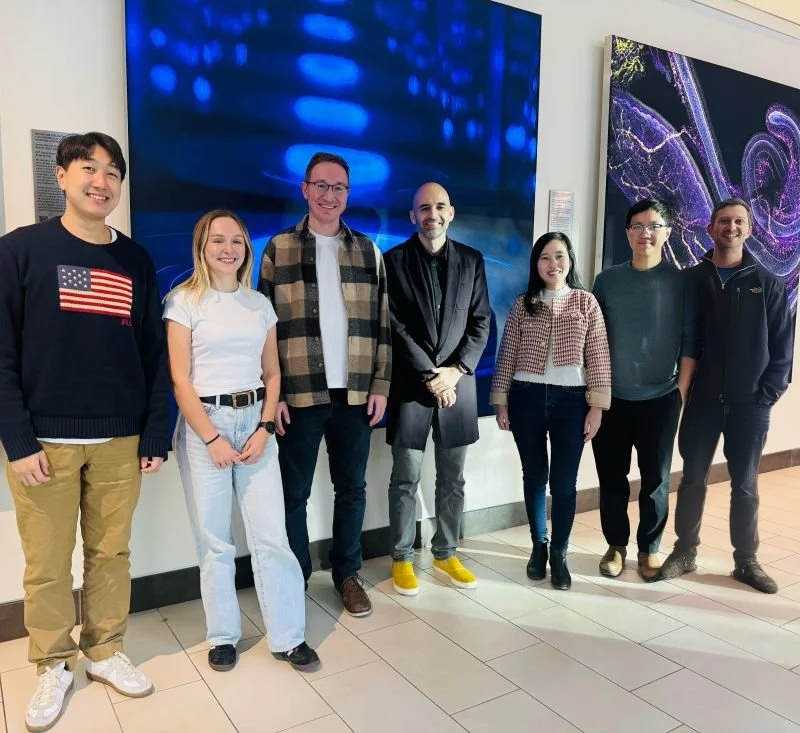
(From left to right) Dae Hee Hwang (Henry Lab), Megan Priestley (Stark Lab), Jonathan Roth (Sánchez-Rivera Lab), Tarek Fadel, Khanh Tran (Jaklenec Lab), Bing Shui (Jacks Lab), and Taylor Heim (Spranger Lab).
News
Polymer-Coated Nanoparticles Deliver IL-12 Directly to Ovarian Tumors
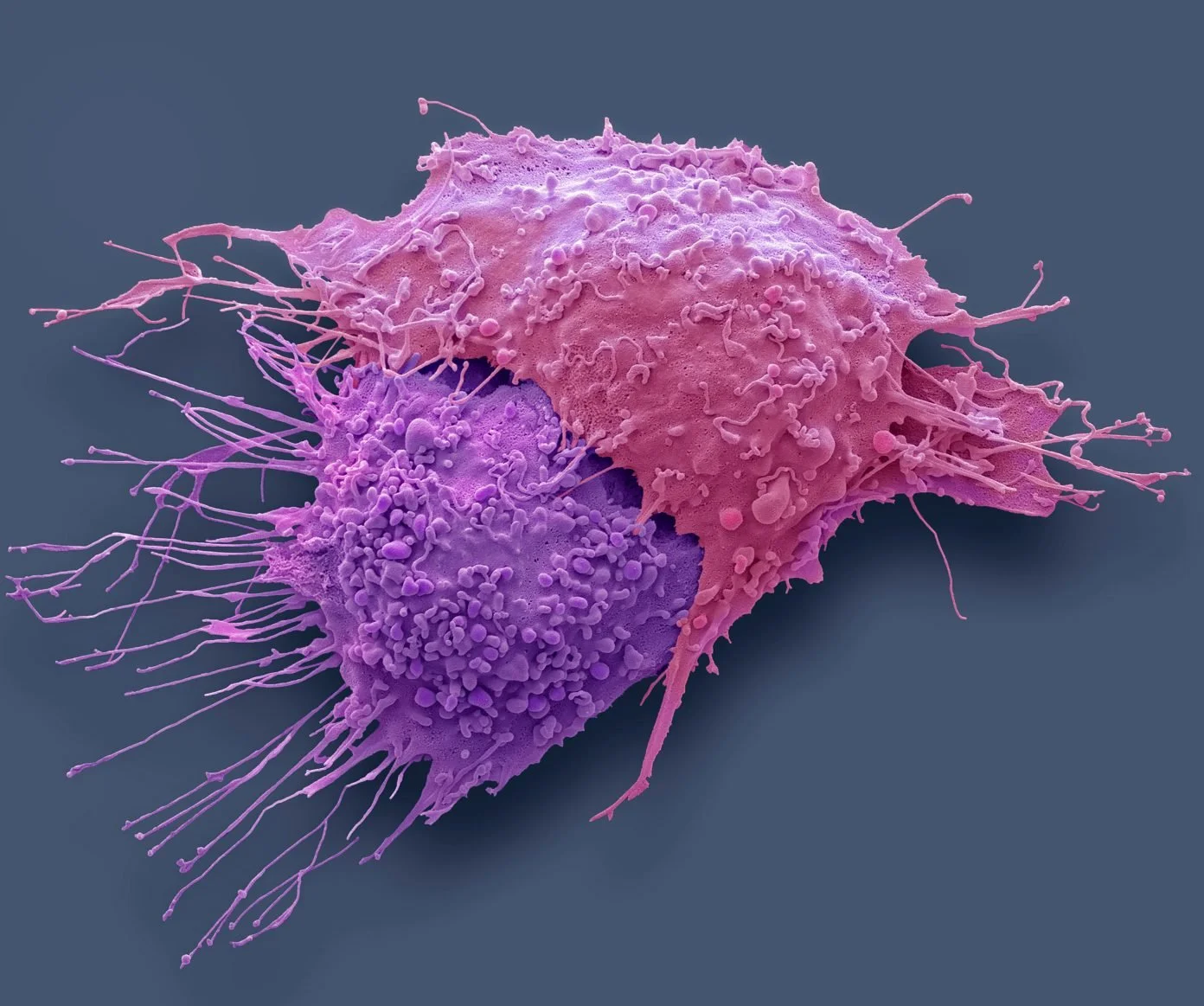
Credit: Steve Gschmeissner/Science Photo Library
Cancer immunotherapies, such as immune checkpoint inhibitors (ICIs), are effective against many types of cancer. However, these treatments don’t work well for some tumors, including ovarian cancer (OC). MIT researchers have now designed polymer-coated nanoparticles (NPs) that can deliver the immune-stimulating molecule IL-12 directly to ovarian tumors. Preclinical studies showed that when given alongside immune checkpoint inhibitor therapy, IL-12 helped the immune system launch an attack on cancer cells. Working with a mouse model of ovarian cancer, the researchers demonstrated that the combination treatment could eliminate metastatic tumors in more than 80% of animals. When the mice were later injected with more cancer cells to simulate tumor recurrence, their immune cells remembered the tumor proteins and cleared them again.
“What’s really exciting is that we’re able to deliver IL-12 directly in the tumor space,” said Paula Hammond, PhD, an MIT Institute Professor, MIT’s vice provost for faculty, and a member of the Koch Institute for Integrative Cancer Research. “And because of the way that this nanomaterial is designed to allow IL-12 to be borne on the surfaces of the cancer cells, we have essentially tricked the cancer into stimulating immune cells to arm themselves against that cancer.”
Hammond and Darrell Irvine, PhD, a professor of immunology and microbiology at the Scripps Research Institute, are senior authors of the team’s published report in Nature Materials,” titled “IL-12-releasing nanoparticles for effective immunotherapy of metastatic ovarian cancer,” in which the authors stated, “These findings demonstrate the potential of ‘target-and-release’ NP designs to effectively concentrate cytokine in disseminated OC lesions and promote robust antitumor immunity.”
Study first author Ivan Pires, PhD, is currently a postdoc at Brigham and Women’s Hospital. Most tumors express and secrete proteins that suppress immune cells, creating a tumor microenvironment (TME) in which the immune response is weakened. One of the main players that can kill tumor cells are T cells, but they get sidelined or blocked by the cancer cells and are unable to attack the tumor. Checkpoint inhibitors are an FDA-approved treatment designed to take those brakes off the immune system by removing the immune-suppressing proteins so that T cells can mount an attack on tumor cells. Read more…
Novel LNP Delivers Influenza mRNA Vaccine at 100-Fold Lower Dose
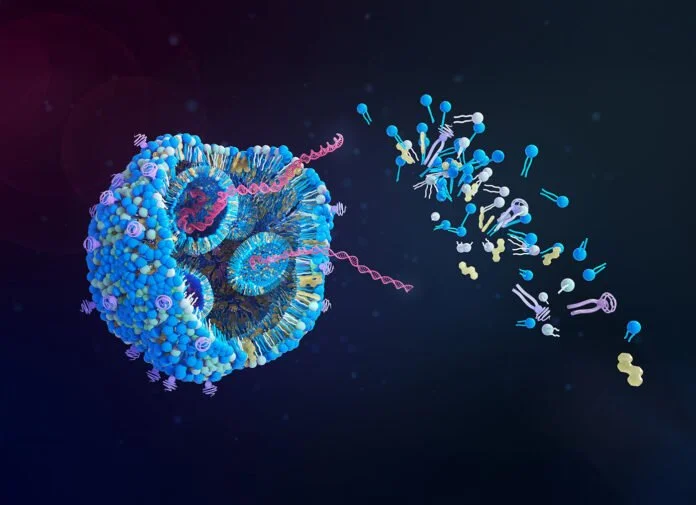
(Genetic Engineering and Biotechnology News) The advent of mRNA vaccination, ignited by the COVID-19 pandemic, has sparked research to build the next generation of vaccine. Specifically, to address limitations of current mRNA vaccines—such as increasing vaccine potency and reducing toxicity. Now, a new delivery LNP, developed through sequential combinatorial chemistry and rational design, and based on a class of degradable, cyclic amino ionizable lipids, has been developed at MIT. The novel LNP could make mRNA vaccines more effective and potentially lower the cost per vaccine dose.
In mouse studies, the researchers showed that an mRNA influenza vaccine delivered with their new LNP could generate the same immune response as mRNA delivered by nanoparticles made with FDA-approved materials, but at around 1/100 the dose.
This work is published in Nature Nanotechnology in the paper, “Degradable cyclic amino alcohol ionizable lipids as vectors for potent influenza mRNA vaccines.”
“One of the challenges with mRNA vaccines is the cost,” says Daniel Anderson, PhD, professor in MIT’s department of chemical engineering and a member of MIT’s Koch Institute for Integrative Cancer Research and Institute for Medical Engineering and Science (IMES). “Our goal has been to try to make nanoparticles that can give you a safe and effective vaccine response but at a much lower dose.”
The team sought to develop particles that can induce an effective immune response, but at a lower dose than the particles currently used to deliver COVID-19 mRNA vaccines. That could not only reduce the costs per vaccine dose, but may also help to lessen the potential side effects, the researchers say. Read more…
A new patch could help to heal the heart
(Anne Trafton | MIT News) MIT engineers have developed a flexible drug-delivery patch that can be placed on the heart after a heart attack to help promote healing and regeneration of cardiac tissue. The new patch is designed to carry several different drugs that can be released at different times, on a pre-programmed schedule. In a study of rats, the researchers showed that this treatment reduced the amount of damaged heart tissue by 50 percent and significantly improved cardiac function. If approved for use in humans, this type of patch could help heart attack victims recover more of their cardiac function than is now possible, the researchers say.
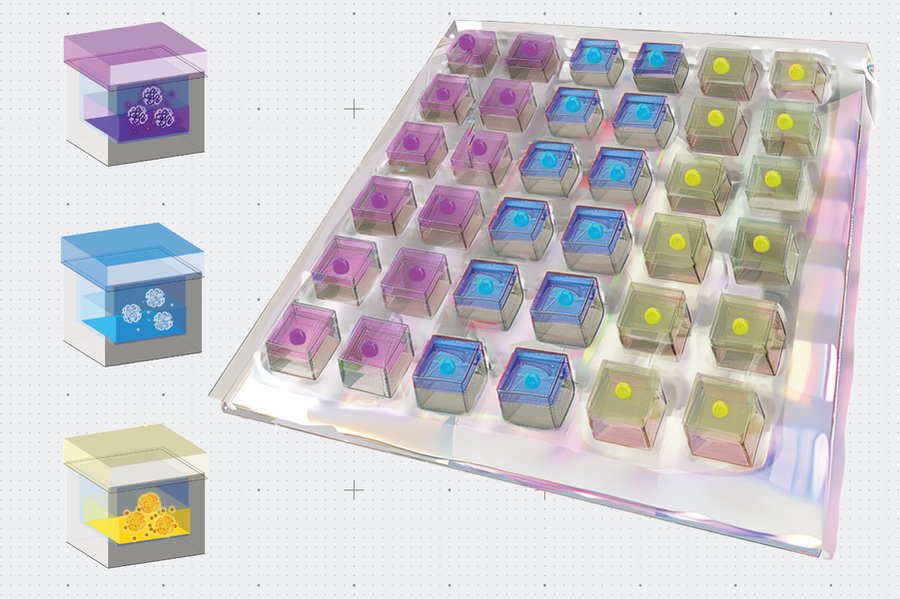
MIT engineers have developed a flexible drug-delivery patch that can be placed on the heart after a heart attack to help promote healing and regeneration of cardiac tissue. The patch is designed to carry several different drugs that can be released at different times, on a pre-programmed schedule. Credit: Courtesy of the researchers
“When someone suffers a major heart attack, the damaged cardiac tissue doesn’t regenerate effectively, leading to a permanent loss of heart function. The tissue that was damaged doesn’t recover,” says Ana Jaklenec, PhD, a principal investigator at MIT’s Koch Institute for Integrative Cancer Research. “Our goal is to restore that function and help people regain a stronger, more resilient heart after a myocardial infarction.”
Jaklenec and Robert Langer, the David H. Koch Institute Professor at MIT and a member of the Koch Institute, are the senior authors of the new study, which appears in Cell Biomaterials. Former MIT postdoc Erika Wangis the lead author of the paper. Read more…
Job opportunities
Scientist, LNP, CRISPR Therapeutics. The ideal candidate will have experience in lipid nanoparticle (LNP) design, formulation and characterization, with proven experience in designing novel solutions for encapsulation of different nucleic acid payloads (such as mRNA, siRNA, etc.). Experience in the space of target delivery or extra-hepatic delivery strategies is highly desirable. You will be part of a team responsible for driving the development of our delivery platform, from initial concept and screening through in vivo proof of concept studies.
Scientist / Senior Scientist, Nucleic Acid Delivery, Lila Sciences. Lead development of next-generation platforms for targeted delivery of nucleic acid-based therapeutics, including lipid nanoparticles and alternative gene delivery systems. The role will span developing novel chemistries, targeting strategies, and formulations; standing up high-throughput, automated screens; and building novel characterization methods that explain and predict performance. You’ll partner with chemistry, biology, automation/robotics, and AI teams and leverage both internal team and external CROs to turn design–build–test–learn into a closed loop that continuously improves therapeutics discovery, development, and delivery.
Funding opportunities
| Sanofi iDEA-TECH Awards 2025-2026 | December 12, 2025 |