September Bulletin
Issue 120
Community Notices
Marble Center Distinguished Seminar with Dr. Natalie Artzi, September 28 (4-5pm).
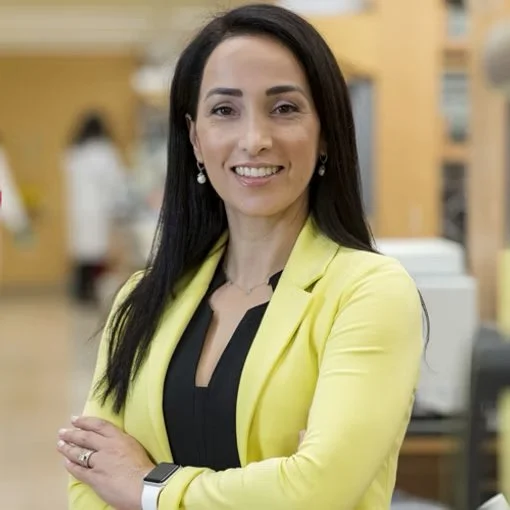
The Marble Center will host Dr. Natalie Artzi as part of our distinguished seminar series on September 28, 4-5pm (Luria Auditorium). Dr. Artzi is Professor of Medicine at Harvard Medical School, the Hansjörg Wyss Associate Professor of Biologically Inspired Engineering at Harvard University, Head of Structural Nanomedicine at Mass General Brigham's Gene and Cell Therapy Institute, Associate Institute Director of the Wyss Institute for Biologically Inspired Engineering at Harvard University, and Visiting Scientist at the Institute for Medical Engineering and Science at MIT.
Dr. Artzi is a biomedical scientist-engineer renowned for transformative contributions to structural nanomedicine and pioneering work on tissue- and cell-responsive materials. Dr. Artzi developed materials that activate based on chemical cues, enabling targeted drug delivery, and creating a novel "depot effect" where nanotherapeutics are released to neighboring cells to enhance immune therapy. Read more…
News
Amping up T cells to target cancer
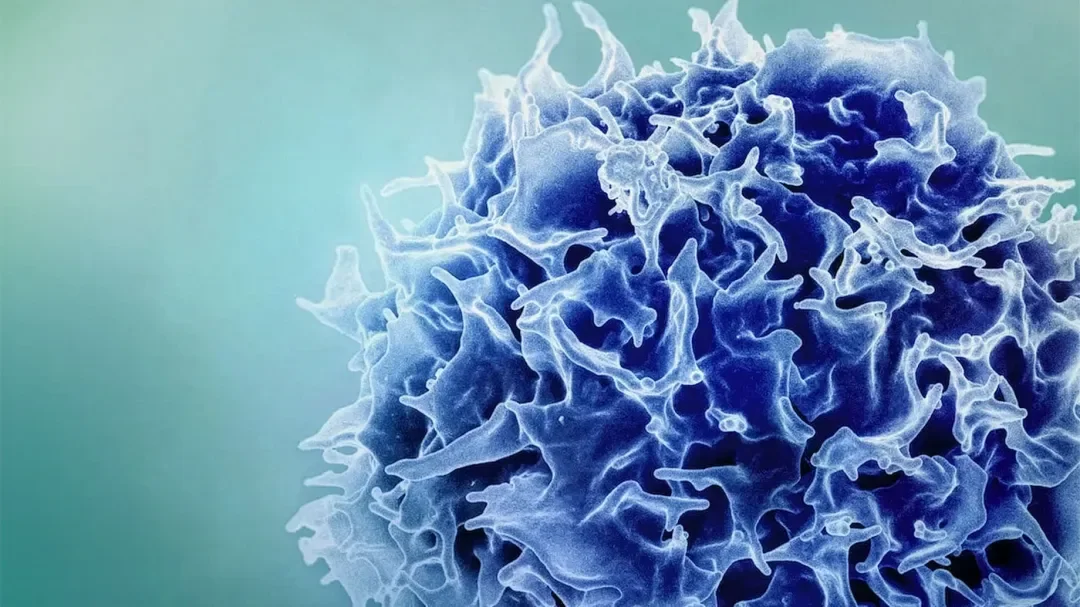
In the new technique, the immune response of T cells (pictured) is supercharged by mRNA molecules encoding genes that turn on certain immune signaling pathways. NIAID
(Anne Trafton | MIT Technology Review) Vaccines that turn the body’s immune system against tumors have shown promise in clinical trials, and a handful have been FDA approved for certain cancers. In many patients, however, these vaccines don’t stimulate enough of a response, and the approach some researchers have taken to strengthening it—delivering the vaccine along with immune-stimulating molecules called cytokines—can cause severe side effects. Now MIT chemical engineer Daniel Anderson and colleagues at MIT, Harvard, and the University of Houston have reported promising results with a different way of attacking the problem: amplifying the T-cell response to mRNA vaccines. The advance could lead to much more powerful cancer vaccines as well as stronger protection against infectious diseases.
Most vaccines generate not only antibodies but also T cells that can activate antigen-presenting cells, which help tell the immune system what to attack. In their study, the researchers boosted that response with a new type of vaccine adjuvant (a material that can help stimulate the immune system). It consists of mRNA molecules encoding two genes that can switch immune cells into a more active state by turning on certain signaling pathways. In studies of mice modeling bladder cancer, colon carcinoma, melanoma, metastatic lung cancer, and more, injections of lipid nanoparticles containing the mRNA-encoded adjuvant enabled the immune system to slow growth of some tumors and eradicate many others. This happened even when the mice were not given a vaccine against a specific cancer antigen, but when they were, the response was stronger still. “When these adjuvant mRNAs are included in the vaccines, the number of antigen-targeted T cells is substantially increased. These T cells play an important role in the immune response,” Anderson says. The mRNA adjuvant also enhanced the immune response to immunotherapy drugs called checkpoint blockade inhibitors, which work by lifting a brake that tumor cells put on T cells and are FDA approved to treat several kinds of cancer. Read more…
Engineering Precision in Nanomedicine─Sangeeta Bhatia on Programmable Delivery and Early Disease Detection

(ACS Nanomedicine) In conversation with ACS Nano Medicine, Prof. Bhatia discusses how interdisciplinary thinking, programmable nanotechnologies, and translational innovation are reshaping the future of precision health. (Below is an excerpt of the Q/A):
NM: You are trained as both a physician and an engineer. How have these dual perspectives shaped your approach to identifying problems and designing nanomedicine solutions? Bhatia: I think of myself primarily as an inventor who uses engineering tools for medical innovation. To me, engineering is the lens through which I try to improve a patient’s journey. From an engineering perspective, I’ve been interested in leveraging the unique physical and biological properties that emerge at the nanoscale to create new capabilities. Properties such as size-dependent trafficking or charge-dependent internalization are attributes of nanoscale biology that are uniquely accessible with nanomaterials.
My clinical exposure began during graduate school, when I had the opportunity to spend time in hospital settings as part of my doctoral training. That immersion helped me understand the workflow, vocabulary, and delivery of health care. As an engineer, this exposure offered a fountain of opportunities. Later in medical school, I kept a notebook to capture the steady stream of things that could be done better or differently. I still shadow clinical colleagues periodically, and those experiences can spark entirely new research directions. Questions like Could we replace a liver biopsy?or Can we make a breath test for pneumonia? can become the starting point for a technology platform and ultimately a medical tool.
Clinical training also lowers an engineer’s barrier for moving fluidly across subspecialties. From a nanoscale transport or microenvironment perspective, cancer, fibrosis, infection, and inflammatory diseases share nanoscale features. That perspective has allowed our lab to adapt ideas across fields─moving between cancer diagnostics, liver disease monitoring, infectious disease stratification, and synthetic biology approaches─without feeling constrained by traditional disciplinary boundaries. Some of the applications we have explored include targeted imaging agents, RNA delivery systems, synthetic biomarkers as diagnostics, microenvironment-responsive therapeutics, remote control of drug deposition, dual agent theranostics, and “priming” nanomaterials to improve the sensitivity of liquid biopsy blood tests. One thing we’ve learned repeatedly is that the process of inventing these nanotechnologies is highly iterative─you rarely end exactly where you begin, and each cycle of design and testing reshapes both the question and the solution. Read more…

Paula Hammond Named to Forbes 50 over 50: Innovation list
Prof. Paula Hammond has designed polymers and nanoparticles to deliver cancer therapies more precisely, concentrating treatment at diseased tissue while limiting damage elsewhere. She’s also applied her work to materials for use in batteries and fuel cells. In January 2026, she became the first woman to lead MIT’s School of Engineering, after previously serving as the first woman to lead its School of Chemical Engineering. Hammond was awarded the National Medal of Technology and Innovation in 2024, and is among a small group of scientists elected to all three U.S. National Academies—Sciences, Engineering and Medicine.
Job opportunities
Faculty position, Nucelic Acid Nanomedicine, University of British Columbia. The successful candidate is expected to establish a field-defining research and training program that merges principles and techniques of biochemistry / molecular biology and engineering at the wforefront of nanomedicines and cellular therapeutics. The successful candidate is expected to concentrate on addressing emerging needs in diverse areas such as vaccine development, or treatment of cancer, blood disorders, or genetic diseases. Demonstrating significant achievements in delivering groundbreaking advancements and leading a high-impact research program, along with effectively educating and mentoring future leaders in the specified field, is a key expectation for this position. The successful candidate may assume a leadership role within UBC's nanomedicine initiative. They will be expected to capitalize on and contribute to resources and initiatives available at the university that foster the advancement of nanomedicines, such as NanoCore and the RNA Core. NanoCore offers expertise in lipid nanoparticle (LNP) design and manufacturing, established by Dr. Peter Cullis for the NanoMedicines Innovation Network (NMIN). The RNA Core provides high-quality custom RNA to both academic and industrial researchers on demand.
Senior Scientist, Delivery Science, Moderna. Moderna is seeking an accomplished Scientist to lead the development of targeted lipid nanoparticle (LNP) formulations within a fast-paced, cross-functional R&D organization. In this role, you will advance the science of LNP self-assembly, engineer delivery systems for small- and large-molecule payloads beyond the liver and leverage state-of-the-art analytical techniques to establish structure–function relationships that drive biological performance. You will also integrate high-throughput formulation, laboratory automation, and AI/ML-enabled approaches to accelerate LNP discovery and support data-driven decision-making across multidisciplinary research programs.
Funding opportunities
| Funding Source | Deadline | Koch Institute Bridge Project RFP | October 13, 2026 | Deshpande / HEALs Momentum grant RFP | October 19, 2026 |
|---|