October Bulletin
Issue 121
Community Notices
Celebrate National Nanotechnology Day on October 9!
The annual National Nanotechnology Day takes place on October 9, a date chosen to honor the nanometer scale (10-9 meters). This worldwide celebration highlights how nanotechnology enriches our daily lives today and the exciting opportunities it offers for the future. Schools, universities, and organizations across the country and around the world will join in to showcase and explore the impact of this transformative science. Did you know that 2026 marks the 10th anniversary of both the NNI's National Nanotechnology Day celebration and the Marble Center for Cancer Nanomedicine?
Share how you are celebrating #NationalNanoDay by tagging the Marble Center for Cancer Nanomedicine or the Koch Institute... and if you need some inspiration, check out the Marble Center 10 year anniversary video below!
Save the date! Next Marble Center seminar: November 2, 4–5:00 p.m. (Luria Auditorium)
NextMarble Center seminar is on Monday November 2nd (4-5pm) at the KI Luria Auditorium with a research talk by the Hammond Lab.
The Innovation Frontier: Insiders’ Stories with Stanley Lapidus and Sangeeta Bhatia October 19, 4–5:30 p.m. (Luria Auditorium)


The next session of the MIT HEALS Seminar Series will feature a conversation between Stanley Lapidus, chairman of Mercy BioAnalytics, Inc., and Sangeeta Bhatia, MD, PhD, the John J. and Dorothy Wilson Professor of Engineering at MIT, director of the Laboratory for Multiscale Regenerative Technologies and the Marble Center for Cancer Nanomedicine, as well as an investigator at the Howard Hughes Medical Institute.
Stanley Lapidus is an inventor and entrepreneur. He currently serves as Chairman of Mercy BioAnalytics, which is working to develop an early detection test for ovarian cancer. He is also the founder of two notable diagnostics companies, Cytyc Corp. and EXACT Sciences. He holds 38 U.S. patents and served as a member of the teaching faculty of MIT from 2002 to 2017. In early 2026, he was named to Forbes' list of 250 Greatest Living American Innovators.
Sangeeta N. Bhatia, MD, PhD, is an inventor, MIT professor, and biotech entrepreneur who adapts technologies developed in the computer industry for medical innovation. Trained as both a physician and engineer, Sangeeta's lab leverages miniaturization tools from the computer industry for medical innovation with applications in liver disease, cancer, and infectious diseases. She and her over 150 trainees have contributed to more than 65 issued or pending patents, launched multiple biotechnology companies to improve human health, and published more than 235 peer-reviewed papers. Bhatia is the first female physician-scientist in history to be elected to all five of the US National Academies. She has also been honored with the Lemelson-MIT Prize (known as the "Oscar" for inventors), the Heinz Medal, and the Othmer Gold Medal for groundbreaking inventions and advocacy for women in STEM fields.
This session of The Innovation Frontier: Insiders' Stories is presented in collaboration with MIT's Initiative for New Manufacturing (INM) and the Marble Center for Cancer Nanomedicine.
News
Amplifyer Bio publishes liquid biopsy preclinical data showing up to a 100-fold increase in ctDNA recovery
(Adapted from Amplifyer Bio Press Release) Amplifyer Bio, a biotech company unleashing the power of liquid biopsies, announced last month preclinical data showing that a humanized priming agent achieved up to a 100-fold increase in circulating tumor DNA (ctDNA) recovery. You can access the poster here.
“Liquid biopsy tests offer a far less invasive and costly approach to detecting cancer, but currently the effectiveness of liquid biopsies is limited due to the human body quickly removing circulating tumor DNA from the bloodstream before it can be measured. Our approach is designed to recover more cell-free DNA input per blood draw, which has the potential to make liquid biopsies far more widespread and clinically actionable,” said Annie Murphy, President and CEO of Amplifyer Bio.
Amplifyer has raised $7 million in seed funding led by Pillar VC to improve liquid biopsies through boosting ctDNA yield with humanized priming agents. At the 2026 ctDNA International Symposium, Amplifyer shared significant milestones from designing and screening 74 humanized DNA-binding antibodies. Highlights include:
Multiple humanized candidates outperformed the academic antibody, achieving greater than 20-fold increases in ctDNA recovery two hours after administration.
A humanized candidate achieved up to 100-fold recovery in ctDNA.
Priming produced significantly better sensitivity for cancer detection with a 16-probe panel and more comprehensive molecular profiling.
cfDNA binding is tumor-agnostic and confirmed across a diverse set of human cancer cell lines.
Whole-genome sequencing confirmed that some candidates preserved cfDNA fragmentomic features and did not introduce GC bias.
“This is the first time we've shown a humanized priming agent driving ctDNA recovery in vivo, and the effect sizes are substantially larger than anything we saw with our earlier academic antibody. An increase of this magnitude won't just be an incremental gain in test performance, but could mean shifting a signal that's below the limit of detection for many patients to one a clinician can act on. The results from this study will allow us to advance a lead priming agent candidate into clinical development,” said Carmen Martin-Alonso, Founding Scientist, Amplifyer Bio.
New formulation helps RNA vaccines withstand high temperatures
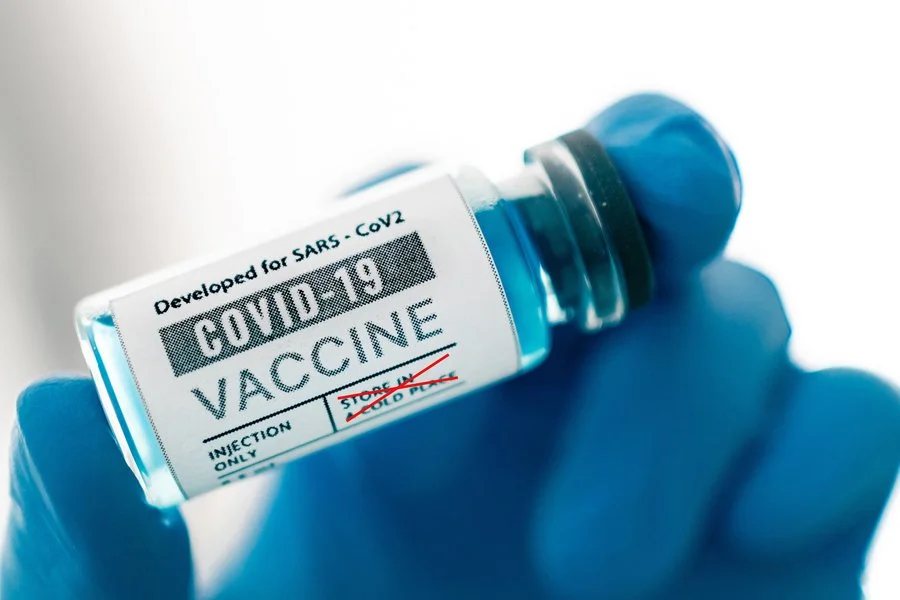
(Anne Trafton, MIT News) RNA vaccines, which have been proven effective against Covid-19, are now being developed for many other diseases, including cancer. One of the drawbacks to these vaccines is that they require ultracold storage, but researchers from MIT have found a promising way to overcome that limitation. With help from an AI algorithm, the researchers tweaked the formulation surrounding the lipid nanoparticles that are typically used to deliver mRNA vaccines, making the vaccines more heat-resistant. Using this approach, they formulated vaccines that could remain stable even when stored at room temperature for up to a year, or at nearly 100 degrees Fahrenheit for two months.
When Covid-19 vaccines carried by these particles were administered to mice, they generated just as strong an immune response as an RNA Covid-19 vaccine similar to one developed by Moderna. By using the AI algorithm to predict the optimal formulations for the particles, the researchers were able to cut down the number of experiments they needed to do, which rapidly sped up the development process. “The real beauty of this algorithm is that we can use it with small data sets,” says Ana Jaklenec, a principal investigator in MIT’s Koch Institute for Integrative Cancer Research. “It’s really hard to run thousands of experiments, so this algorithm allows us to more easily achieve formulations with features that we want — in this case, stability.”
Jaklenec and Robert Langer, the David H. Koch Institute Professor, are the senior authors of the paper, which appears in Nature Biotechnology. Graduate student Jinbi Tian and postdoc and KI Convergence Scholar Khanh Tran are the lead authors of the paper. Read more…
New cell-collection device could improve early cancer detection
One of the main reasons that ovarian cancer is among the deadliest forms of cancer is timing: When doctors catch it early, the five-year survival rate can be north of 90 percent. But when doctors catch it late, in stages 3 or 4, five-year survival is less than half that. About 20 years ago, researchers studying ovarian cancer discovered that many cases of high-grade serous ovarian cancer, the most common type, originate in the fallopian tubes. Detecting the disease there remains challenging, in part because its precursor lesions can be microscopic and difficult to sample.
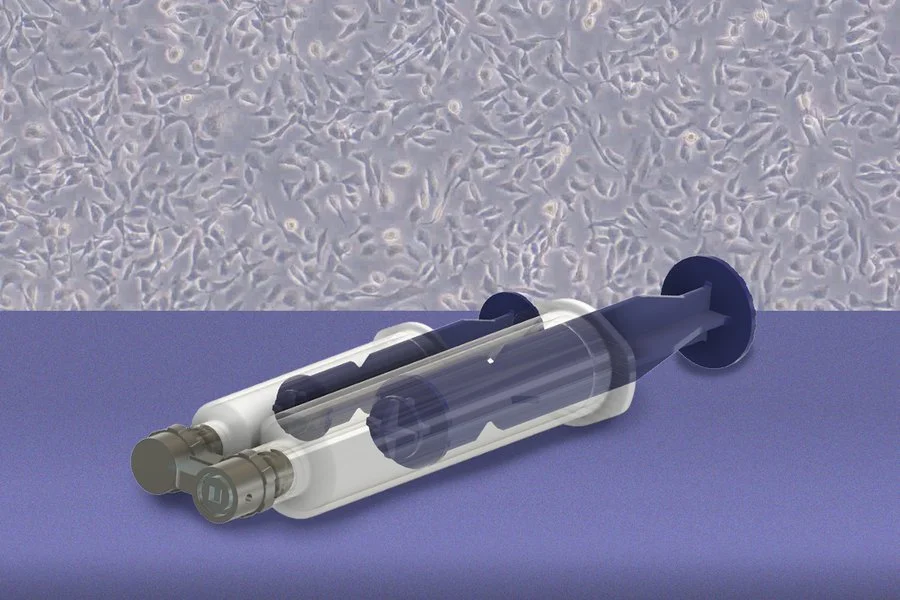
Now researchers in the group of MIT Professor Kripa Varanasi, working with colleagues at MIT and Johns Hopkins University, have developed a handheld device capable of gently collecting living cells from specific locations to test for ovarian and many other types of cancer. The researchers believe the technique could one day be used to catch cancers earlier and more effectively. It could also be used to create treatments based on individual patient samples.
In a study describing the system in the journal Device, the researchers showed their system enables targeted sampling of newly excised tissue, and they used it to recover living cells for cultivation and testing. The device holds a small microfluidic channel against the tissue and uses a syringe to drive fluid through the channel, applying a force parallel to the tissue surface to gently detach living cells from tiny sections of tissue. Read more…
Job opportunities
Faculty position, University of California San Francisco. The UCSF Department of Bioengineering and Therapeutic Sciences invites applications for a faculty position. While the goal of the search is focused on junior candidates (to be appointed at the Assistant Professor level), we will consider exceptional candidates with more experience (who could be appointed at Associate or Full Professor). We welcome applications from creative scientists asking fundamental questions and creating innovative technologies to join our interdisciplinary department of investigators. The department is interested in recruiting new faculty who work at interfaces between scientific disciplines represented within our department (including computational biology, molecular engineering and design, therapeutic bioengineering, systems pharmacology, drug development sciences, pharmacogenomics) and across the entire discovery science community at UCSF (e.g. biochemistry, biophysics, cell biology, pharmacology, pharmaceutical chemistry, physiology, neuroscience, human genetics). We are particularly interested in candidates who are at the forefront of developing, applying, and/or leveraging artificial intelligence/machine learning methods to answer high impact biological questions. Applications will be considered from scientists with experimental and/or computational backgrounds.
Bioengineering Tenure Track position, University of Pennsylvania. Candidates should hold a doctoral degree in Bioengineering/ Biomedical Engineering or a related field. At the assistant professor level, individuals should demonstrate stellar academic credentials and promise for a visionary career in bioengineering research. At higher professorial levels, a proven and evident track record of research excellence, including successful competitive research funding and academic standing, is expected. A commitment to teaching and pedagogical excellence should also be apparent, consistent with experience and rank, including development of undergraduate and graduate courses, supervision of doctoral students, and academic and professional mentoring and advising of students at all levels. We seek individuals who are committed to nurturing and building our scholarly community in the broadest sense, participating in departmental, school-level, and university-level efforts towards this goal, and to work closely with students to identify and address challenges.
Funding opportunities
| Funding Source | Deadline | Koch Institute Bridge Project RFP | October 13, 2026 | Deshpande / HEALs Momentum grant RFP | October 19, 2026 |
|---|