February Bulletin
Issue 113
Community Notices

Ariana Barreiro (Birnbaum Lab, MIT)
Next Marble Center Seminar with the Birnbaum Lab, Monday March 30th (4-5pm, Luria Auditorium)
Next Marble Center seminar is on Monday March 30th (4-5pm) at the KI Luria Auditorium with a research talk by Ariana Barreiro of the Birnbaum lab. The title of her talk is “Engineering Targeted Lentiviral Vectors for In Vivo CAR-T Therapy in Cancer.”
Hot topic spotlight: Integrating exposomics into nanomedicine
SAVE THE DATE: Marble Center 10 Year Anniversary Celebration, April 9, 4:30-7pm
Please save the date for a special milestone event celebrating the 10-year anniversary of the Marble Center for Cancer Nanomedicine!
Since its founding, the Marble Center has served as a hub for nanomedicine research supporting an incredible community of innovators, seeding early-stage ideas and bridging between the fascinating worlds of biology and miniaturization to tackle grand challenges in oncology. This anniversary event will bring together faculty and industry leaders to reflect on the Center’s impact over the past decade and to look ahead to the next chapter.
News
Designing the future of metabolic health through tissue-selective drug delivery
(Zach Winn | MIT News) New treatments based on biological molecules like RNA give scientists unprecedented control over how cells function. But delivering those drugs to the right tissues remains one of the biggest obstacles to turning these promising yet fragile molecules into powerful new treatments.
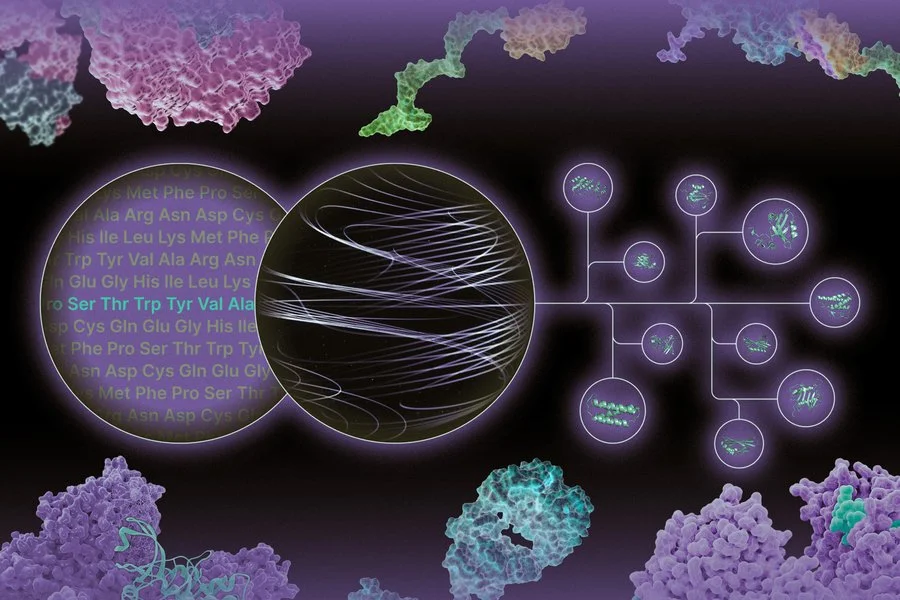
Founded by three MIT alumni, Gensaic is building an AI-powered discovery engine to develop protein shuttles that can deliver therapeutic molecules like RNA to specific tissues and cells in the body. Credits: Image: MIT News; figures courtesy of Gensaic.
Now Gensaic, founded by Lavi Erisson MBA '19; Uyanga Tsedev SM '15, PhD '21 (Belcher Lab); and Jonathan Hsu PhD '22, is building an artificial intelligence-powered discovery engine to develop protein shuttles that can deliver therapeutic molecules like RNA to specific tissues and cells in the body. The company is using its platform to create advanced treatments for metabolic diseases and other conditions. It is also developing treatments in partnership with Novo Nordisk and exploring additional collaborations to amplify the speed and scale of its impact. The founders believe their delivery technology - combined with advanced therapies that precisely control gene expression, like RNA interference (RNAi) and small activating RNA (saRNA) - will enable new ways of improving health and treating disease.
"I think the therapeutic space in general is going to explode with the possibilities our approach unlocks," Erisson says. "RNA has become a clinical-grade commodity that we know is safe. It is easy to synthesize, and it has unparalleled specificity and reversibility. By taking that and combining it with our targeting and delivery, we can change the therapeutic landscape." Read more…
The quest to make vaccines affordable
(Jojo Placides | The Tech) A single shot can protect a child from a life-threatening disease. Yet for the children living in the poorest regions, that protection remains out of reach. Of the 1.5 million who die each year due to preventable infections, 99% live in low- and middle-income countries.
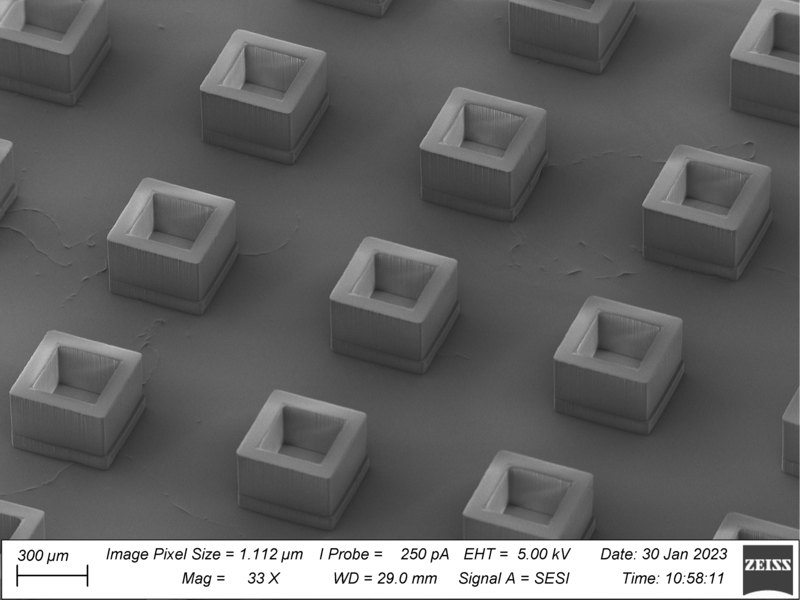
Electron microscope close-ups of empty vaccine carriers made from polyanhydride film. PHOTO PROVIDED BY DAVID MANKUS
Koch Institute principal investigator Dr. Ana Jaklenec PD ’13 has been working on developing cheaper and more effective vaccines. Through her research on single-injection vaccines, Jaklenec hopes to make immunization more accessible. Though she’s a leading figure in the biotech industry, Jaklenec did not come from a family with a scientific background; her dad was a pilot and her mom studied French literature. She discovered her passion for science in a high school chemistry class. “We made banana flavoring,” Jaklenec recalled. “[We] just mixed a bunch of liquids and all of a sudden, [we] smelled it. It’s this idea of making things from invisible [stuff], almost like magic.”
After completing a PhD in biomedical engineering at Brown University, Jaklenec came to MIT to pursue postdoctoral studies under Koch Institute Professor Robert Langer. It was here that she became fascinated by the potential of polymers — large molecules made of small repeating units. Polymers are central to biomedical research, and it was their versatility that intrigued Jaklenec. “They’re in everything in our life,” she emphasized. As it turns out, polymers are one of the key tools Jaklenec’s lab uses to make life-saving treatments more accessible.
Oftentimes, vaccines are administered in multiple doses at different times to maintain the body’s protection against a certain disease. However, on Oct. 1, Jaklenec presented a solution during the MIT.nano Summit that would eliminate multi-dose injections by packing the entire vaccine into a single injection. In 2018, Jaklenec worked with Langer to show how two doses of the polio vaccine could be delivered at once using a polymer called poly(lactic-co-glycolic) acid (PGLA) that encases it. “[Fewer] syringes and needles are used, so [fewer] doctor visits are needed. There’s an added cost to having everything in one injection, but [overall] it costs less than multiple visits,” Jaklenec explained.
To Jaklenec, PGLA has one characteristic that makes it the ideal polymer: its ability to degrade. “By changing its molecular weight, we can change when or how long it takes for it to degrade,” she said. However, as it breaks down, PGLA makes its surrounding environment acidic, which damages the vaccine and reduces its effectiveness. In search of a solution, Jaklenec’s team turned to polyanhydrides — biodegradable polymers that create a less acidic environment when they break down. But there was another problem: polyanhydrides are difficult to manufacture. Due to the polymers’ physical properties, solvent-based methods didn’t work, so Jaklenec’s lab spent years looking for ways to create the precise structures necessary for a single-injection vaccine. Ultimately, they found a solution involving an unexpected combination of methods from microelectronics and semiconductor manufacturing. Using a special technique called StampEd Assembly of polymer Layers (SEAL), Jaklenec created particles that release vaccine doses at different times mice. First, she used silicon molds to shape polyanhydride cups made with microfabrication technologies. Then, she filled these cups with the vaccine antigen, promptly sealing them afterward. Read more…
Job opportunities
Research Scientist, Broad Institute of MIT and Harvard. The Chen Lab at the Broad Institute of MIT and Harvard seeks a highly motivated Research Scientist to independently lead a flagship, multi-year project focused on the design and implementation of RNA sensors for high-throughput brain cell targeting.
This role offers a rare opportunity to drive a cutting-edge research program at the intersection of pooled genetic screening, programmable molecular targeting, and next-generation delivery strategies for the nervous system.
The successful candidate will have primary scientific ownership of the project, spanning conceptual design, experimental execution, data analysis, and collaboration. They will work closely with researchers across the Broad Institute and with external collaborators at partner universities, while also mentoring junior scientists and contributing to the broader intellectual direction of the lab.
This position is ideal for a scientist who is excited to lead ambitious, technology-driven research with translational potential and broad impact across neuroscience and genomics.
Postdoctoral Scientist, Henry Lab, Koch Institute at MIT. Led by Dr. Whitney Henry, an HHMI Freeman Hrabowski Scholar, the Henry Lab investigates the fundamental biology of ferroptosis—an iron-dependent form of cell death—to understand when, where, and why it occurs. The lab studies the molecular and physiological factors that regulate a cell’s susceptibility to ferroptosis across diverse biological contexts, including therapy-resistant cancers, fatty liver disease, and the menstrual cycle. By uncovering how ferroptosis influences tissue function, immune responses, and regeneration, the Henry Lab aims to reveal how metabolism, oxidative stress, and cell death converge to shape cell fat.
Funding opportunities
| MIT HEALS Graduate Fellowships Call for Applications | April 1, 2026 | Innovative Research in Cancer Nanotechnology | May 5, 2026 |