March Bulletin
Issue 114
Community Notices
Marble Center Seminar Monday March 30th (4-5pm, Luria Auditorium)
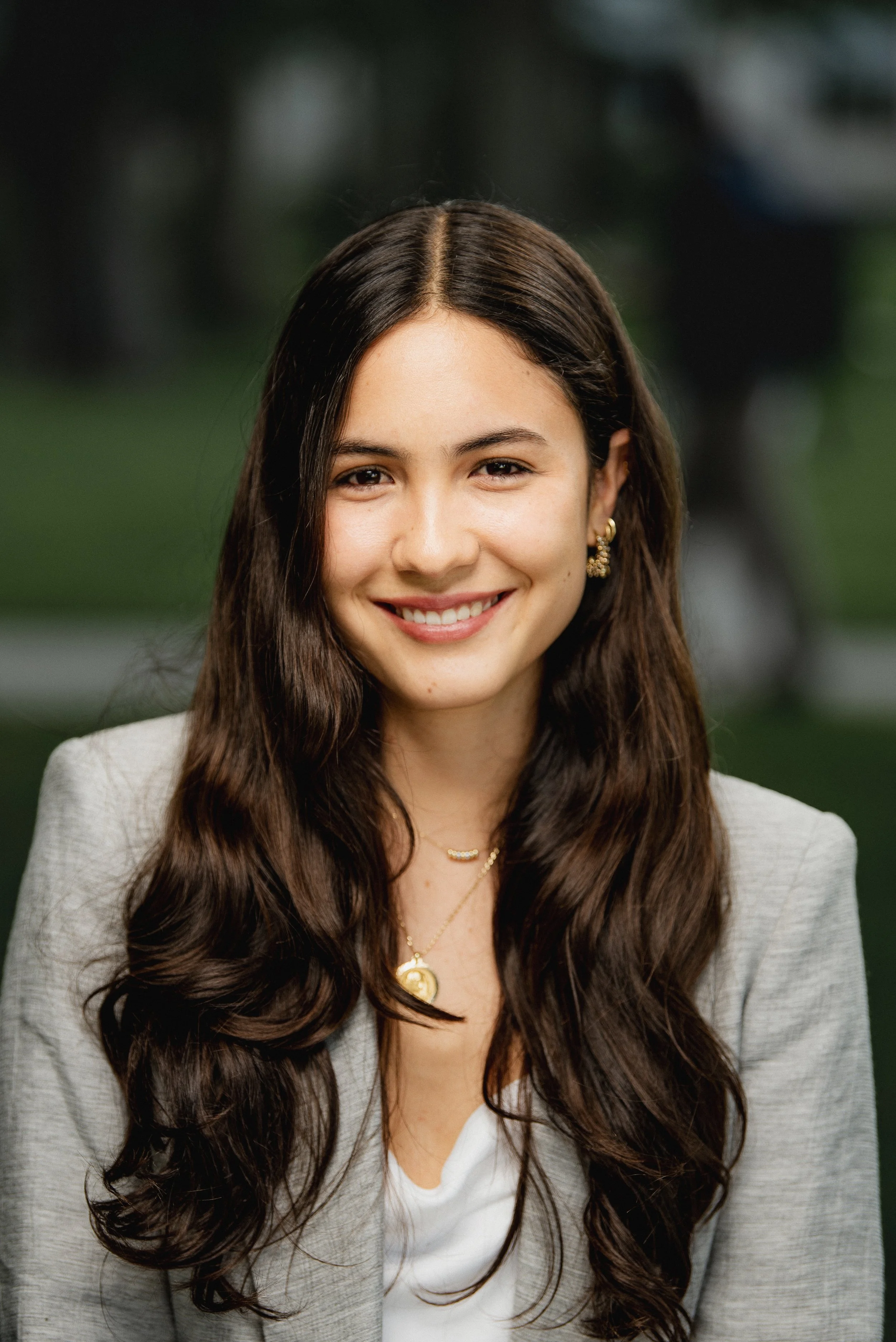
NextMarble Center seminar is on Monday March 30th (4-5pm) at the KI Luria Auditorium with a research talk by Ariana Barreiro of the Birnbaum lab. The title of her talk is “Engineering Targeted Lentiviral Vectors for In Vivo CAR-T Therapy in Cancer.”
Following the talk, we will be hosting a guest hot topic presentation by Dr. B.J. Kim (UT Austin’s College of Pharmacy) on “Progress in Cancer Vaccines Enabled by Nanotechnology,” based on a recent review published in Nature Nanotechnology.
REGISTRATION OPEN: Marble Center 10 Year Anniversary Celebration, April 9 4:30pm
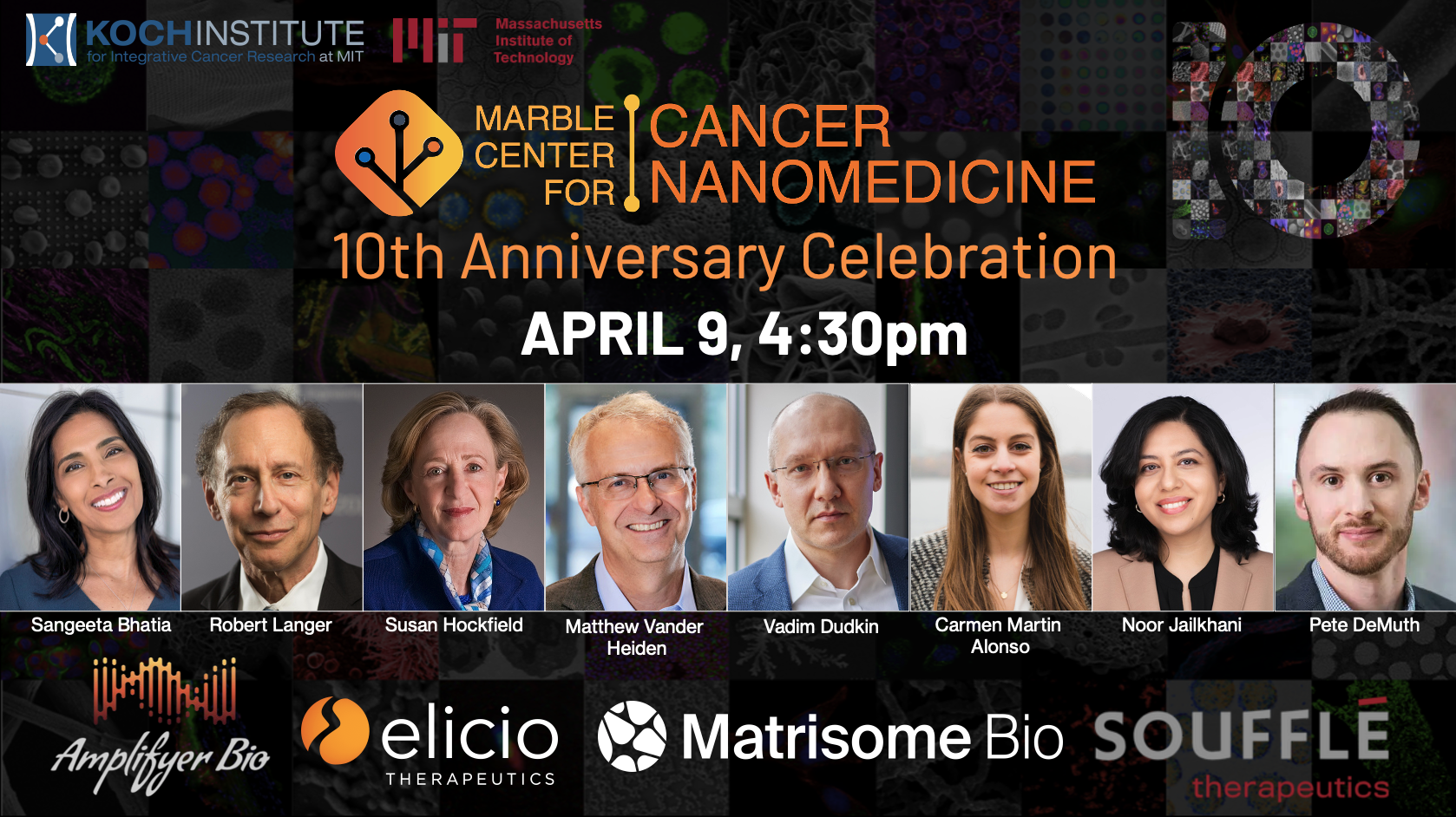
Since its founding, the Marble Center has served as a hub for nanomedicine research supporting an incredible community of innovators, seeding early-stage ideas and bridging between the fascinating worlds of biology and miniaturization to tackle grand challenges in oncology. This anniversary event will bring together faculty and industry leaders to reflect on the Center’s impact over the past decade and to look ahead to the next chapter.
News
The Marble Center presents at the NanoEducators Quarterly Forum
On February 26th, the Marble Center joined the NanoEducators Quarterly forum to provide] an overview of nanomedicine and discussed classroom-ready examples to engage and introduce students to the real world and potential applications of nanomedicine.
Margaret Billingsley (Postdoctoral researcher and ‘24 Convergence Scholar, Hammond Lab) presented an overview to high school teachers, and Christine Pace (educational outreach coordinator, Koch Institute) shared resources that can be used for demonstrations in classroom settings.
This effort is organized by the National Nanotechnology Initiative as part of their NanoEducator quarterly forum, a public webinar series joined by K–12 science teachers for short informational talks, discussions, and informal resource sharing.
Injectable “satellite livers” could offer an alternative to liver transplantation
More than 10,000 Americans who suffer from chronic liver disease are on a waitlist for a liver transplant, but there are not enough donated organs for all of those patients. Additionally, many people with liver failure aren’t eligible for a transplant if they are not healthy enough to tolerate the surgery.
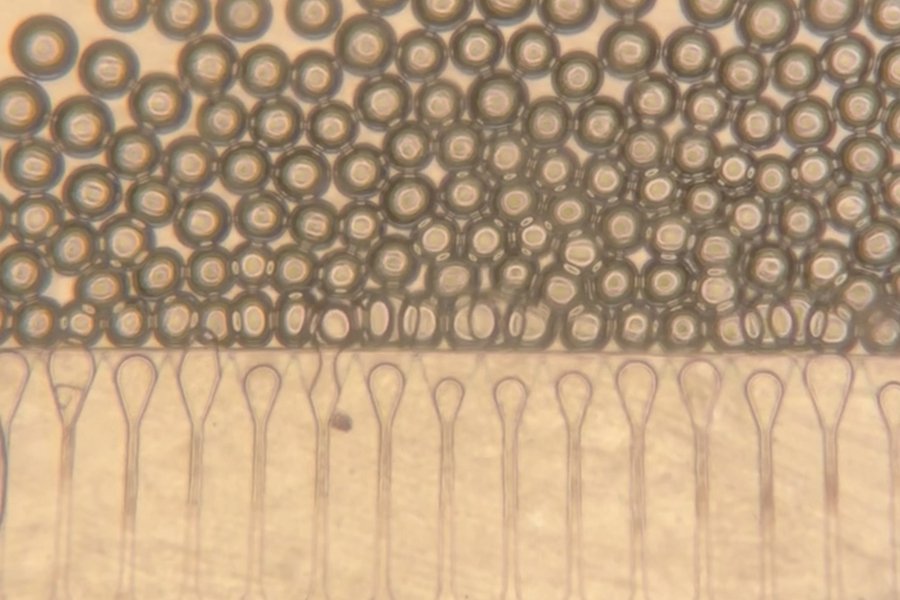
Researchers used a microfluidic device to generate hydrogel microspheres of uniform shape and size. These spheres are then mixed with hepatocytes and injected into the body, where they form stable mini livers. Credits: Credit: Courtesy of the Bhatia Lab
To help those patients, MIT engineers have developed “mini livers” that could be injected into the body and take over the functions of the failing liver. In a new study in mice, the researchers showed that these injected liver cells could remain viable in the body for at least two months, and they were able to generate many of the enzymes and other proteins that the liver produces.
“We think of these as satellite livers. If we could deliver these cells into the body, while leaving the sick organ in place, that would provide booster function,” says Sangeeta Bhatia, the John and Dorothy Wilson Professor of Health Sciences and Technology and of Electrical Engineering and Computer Science at MIT, and a member of MIT’s Koch Institute for Integrative Cancer Research and the Institute for Medical Engineering and Science (IMES).
Bhatia is the senior author of the new study, which appeared in the journal Cell Biomaterials. MIT postdoc Vardhman Kumar is the paper’s lead author. Read more…
MIT-Royalty Pharma Faculty Founder Initiative supports biotech innovators
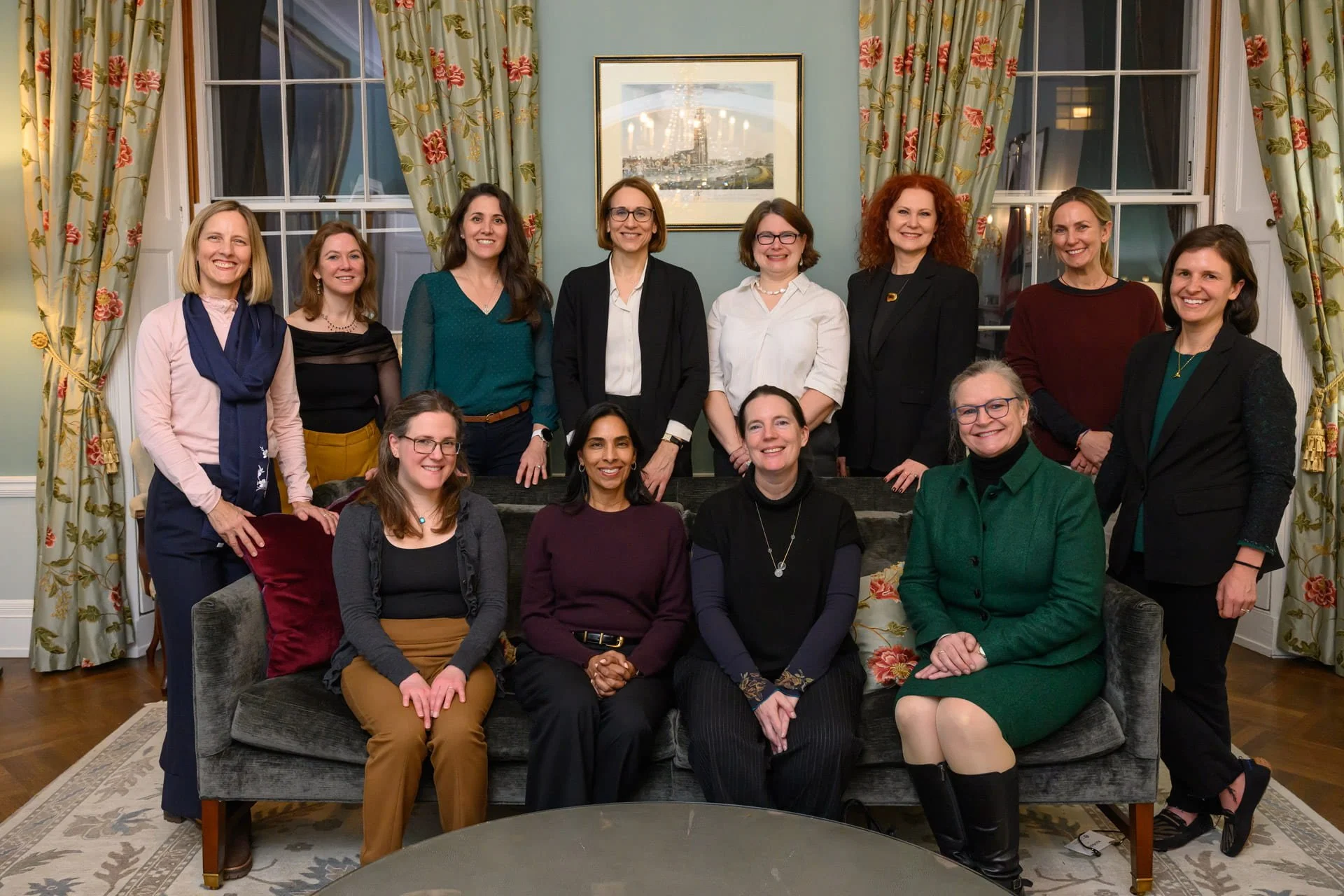
(Jordan Silva | MIT News) The MIT-Royalty Pharma Faculty Founder Initiative, recently renamed in recognition of a gift by Royalty Pharma, runs a two-year program that supports biotech innovators and faculty entrepreneurs interested in commercializing their solutions. The $3 million gift will support four years of the initiative. Over the course of two years, participants receive wide-ranging support to help advance and grow their biotech solutions into startups and companies ready for commercialization. This includes various workshops, executive education classes, and mentorship from world-leading entrepreneurs and investors. The program culminates in MIT-Royalty Pharma Prize Competition Showcase, with the next iteration scheduled for 2027.
“Since the initiative’s launch in 2021, we have supported 21 faculty entrepreneurs, advanced life-saving innovations towards patients, sparked the creation of 16 startups that have collectively raised over $70 million in seed funding, created a community of cofounders, and spread our mission to collaborating universities,” says Sangeeta Bhatia, the John J. and Dorothy Wilson Professor of Health Sciences and Technology and of Electrical Engineering and Computer Science (EECS) at MIT, and faculty director of the MIT-Royalty Pharma Faculty Founder Initiative. “We are grateful for Royalty Pharma in supporting our mission and being a part of our ambitious goal to reach 40 faculty-founded life science ventures by 2029." Read more…
How close are we to ending ovarian cancer?
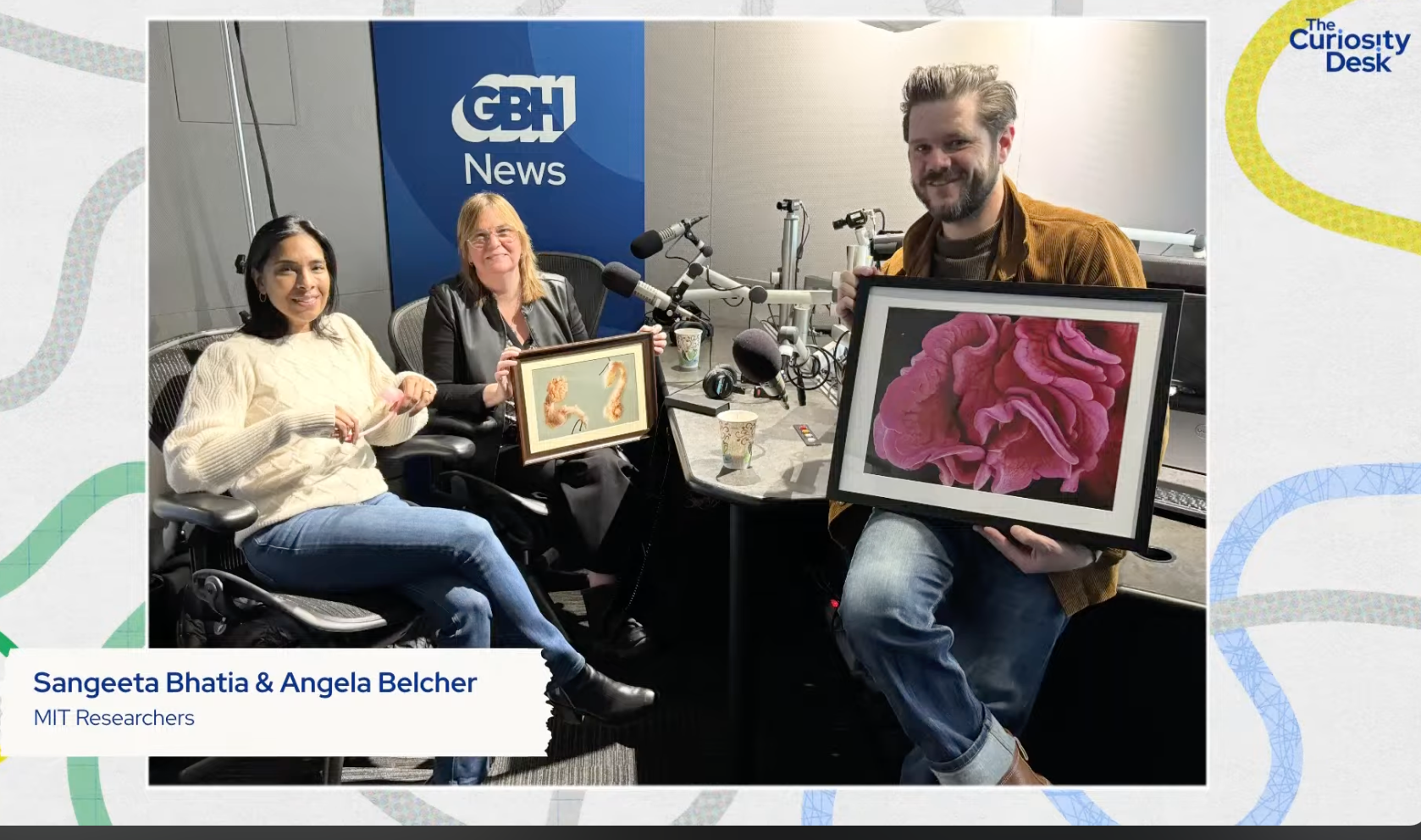
How close are we to ending ovarian cancer? Angela Belcher and Sangeeta Bhatia interview at the GBH News Curiosity Desk
Job opportunities
Postdoctoral Associate - Gerstner Center for Cancer Diagnostics, Broad Institute. The Broad Institute of MIT and Harvard is seeking an outstanding Postdoctoral Associate candidate to join the Priming Agent Team—an exciting multidisciplinary and multi-lab collaboration led by Viktor Adalsteinsson (Gerstner Center for Cancer Diagnostics at Broad), Sangeeta Bhatia (MIT), and J. Christopher Love (MIT)—that seeks to unlock the power of liquid biopsies for cancer diagnostics, by addressing critical biological bottlenecks. The goal of the Priming Agent Team is to develop the first diagnostic drugs for liquid biopsies that improve the recovery of circulating tumor DNA (ctDNA) to enable early cancer detection, monitoring for minimal residual disease, and minimally-invasive tumor genotyping from blood samples (see Martin-Alonso et al Science 2024). We are seeking an exceptionally motivated individual to pursue next generation strategies involving protein engineering, nanoparticle engineering, drug delivery, and/or synthetic biology approaches, to elucidate mechanisms of ctDNA shedding and develop pharmacologically-driven approaches to enable liquid biopsy cancer detection of otherwise low ctDNA-shedding tumors.
Funding opportunities
| MIT HEALS Graduate Fellowships Call for Applications | April 1, 2026 | Innovative Research in Cancer Nanotechnology | May 5, 2026 | MIT HEALS Seed Grant Letter of Intent Deadline | June 1, 2026 |