June Bulletin
Issue 117
Community Notices
Announcing the Integrated Nanoscale Sensing, Imaging, and Health Technologies seed grant
The MIT INSIHT program invites proposals for seed funding to support innovative research at the intersection of nanotechnology, sensing, imaging, and human health. The goal of this program is to catalyze the development of next-generation tools that leverage nanoscale phenomena to solve pressing challenges in early disease detection:
Advanced Nanoscale Imaging: Novel super-resolution techniques, multiplexed imaging agents, or label-free imaging modalities for biological systems.
Nano Sensing: Sensors for real-time monitoring of physiological biomarkers, early disease detection, or therapeutic drug monitoring.
Integration & Miniaturization: Efforts to integrate nano-enabled sensing/imaging capabilities into wearable, implantable, or point-of-care devices.
Precision Diagnostics: Leveraging nanomaterials and artificial intelligence (AI) to increase the sensitivity and specificity of diagnostics for oncology, infectious disease, or neurology.
REGISTER NOW! Koch Institute Annual Symposium, June 18, 2026
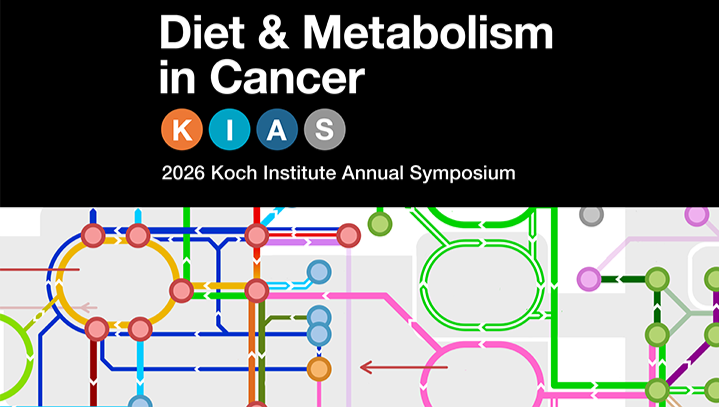
The 2026 Koch Institute Annual Symposium on “Diet and Metabolism in Cancer” will feature international experts from academia and leading clinical institutions and covering topics such as the influence of diet on health and cancer, diet-gut interactions, diet and the immune system, as well as translational applications for diet in anticancer therapy.
News
Big strides in cancer detection and treatment from the tiniest technologies
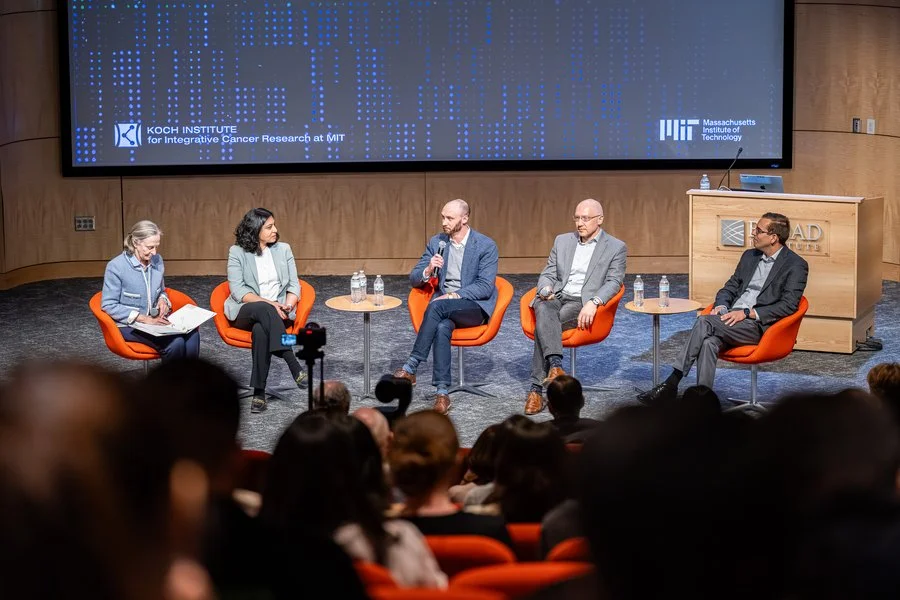
Left to right: MIT President Emerita Susan Hockfield, Noor Jailkhani of Matrisome Bio, Peter DeMuth ’13 of Elicio Therapeutics, Vadim Dudkin of Soufflé Therapeutics, and Viktor Adalsteinsson ’15 of Amplifyer Bio share insights about the difficult but rewarding process of turning lab discoveries and innovations into commercial technologies. (Photo: Ben Gebo)
(MIT News) That there is tremendous potential for nanotechnology to transform cancer detection and treatment is a vision that has guided faculty at the Marble Center for Cancer Nanomedicine through its first 10 years. On April 9, the center gathered researchers, entrepreneurs, clinicians, industry collaborators, and members of the public at the Broad Institute of MIT and Harvard and the Koch Institute for Integrative Cancer Research galleries to celebrate a milestone anniversary and reflect on its journey.
“Our purpose has always been clear: to empower discovery and community in nanomedicine at MIT,” said Sangeeta Bhatia, faculty director at the Marble Center for Cancer Nanomedicine and the John J. and Dorothy Wilson Professor of Health Sciences and Technology and Electrical Engineering and Computer Science at MIT. “A decade in, we are seeing that vision materialize not just in publications, but in our community, our startups, and ultimately, in patients whose lives are being changed,” Bhatia told an audience of about 150 gathered in person for the celebration.
The event featured an overview of the Marble Center by Bhatia and a perspective on nanomedicine by Robert S. Langer, the David H. Koch (1962) Institute Professor and faculty member at the Marble Center. Read more…
A new approach to cancer vaccination yields more powerful T cells
(GEN News) The injectable form of the polio vaccine has proven effective at preventing illness but it does not block the transmission of the virus as well as the oral version of the vaccine. That is because the virus is usually transmitted through contaminated food or water and is first exposed to the GI tract, where the oral vaccine induces a mucosal immune response. To date, several countries no longer use the oral vaccine because there is a small risk of infection. It is also possible for people who receive the injected polio vaccine to spread the virus even though they are asymptomatic.
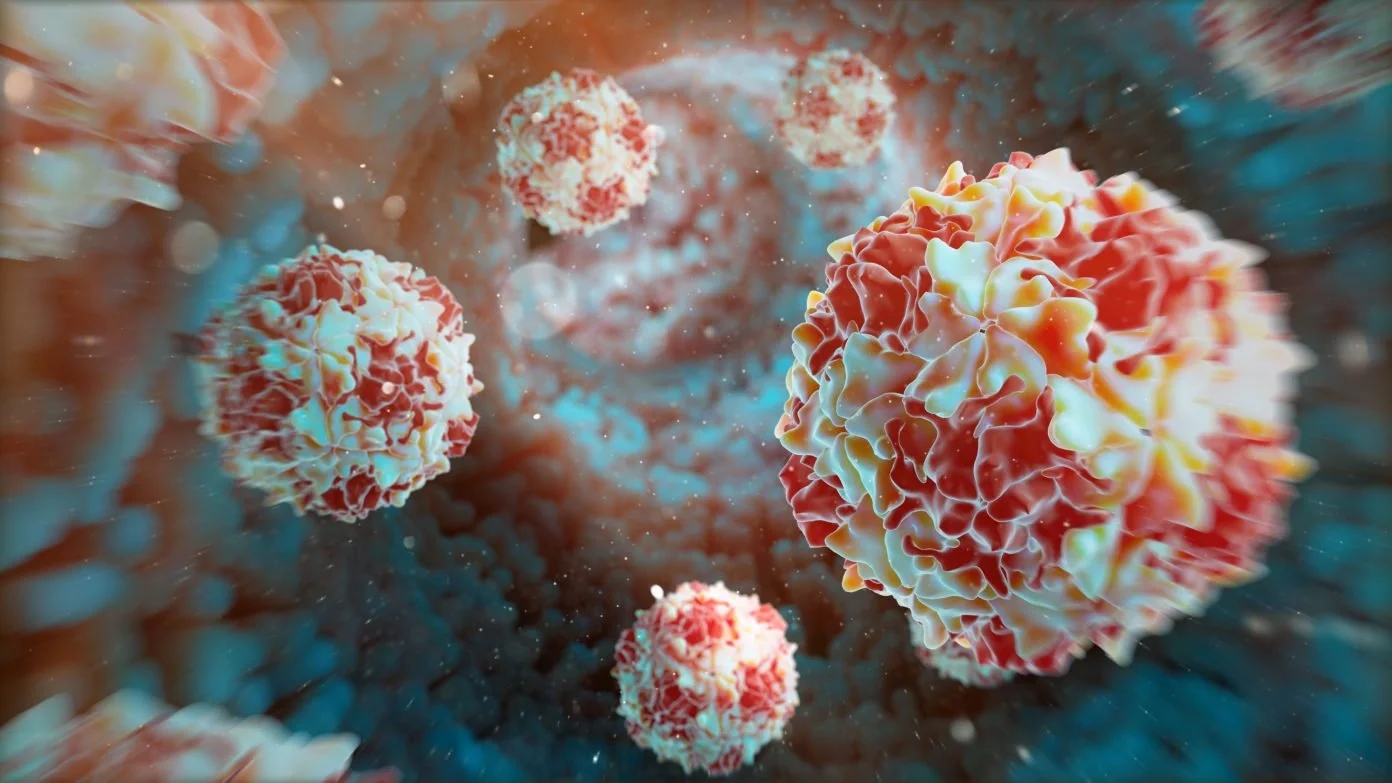
Poliovirus, illustration. [Thomas Leach/Science Photo Library/Getty Images]
Now according to data from a Massachusetts Institute of Technology-led study, it may be possible to modify the injectable vaccine so that it can also promote a mucosal immune response. This way, the vaccine could support polio eradication efforts without the risks of the oral polio vaccine. Details are published in a new Science Advances paper titled “Am80-Lipid nanoparticles serve as an enteric mucosal adjuvant 3 following parenteral immunization with inactivated polio vaccine.”
In comments that shed some light on the thinking behind the work, Ana Jaklenec, PhD, a principal investigator in MIT’s Koch Institute for Integrative Cancer Research, stated that while “people who are vaccinated with the injectable vaccine are not getting sick” they may be helping spread the highly contagious virus. “Mucosal immunity could help lower that shedding and ideally eliminate it,” she said.
Her team’s version of the vaccine comprises an injectable, inactivated polio vaccine delivered with a nanoparticle-based adjuvant that helps steer immune cells to the mucosal lining of the intestine. Digging into the details, Jaklenec and her team worked with a group at Harvard Medical School who have shown previously that using a derivative of vitamin A as a vaccine adjuvant can help stimulate immune cells to go into the GI tract. Read more...
A new approach to cancer vaccination yields more powerful T cells
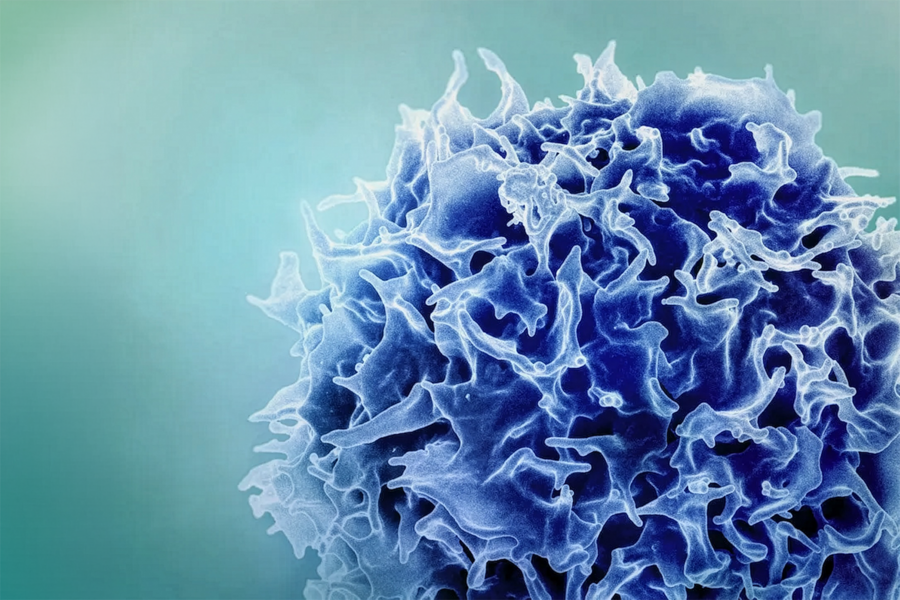
MIT engineers have developed a new way to amplify the T cell response to mRNA vaccines — an advance that could lead to much more powerful cancer vaccines and stronger protection against infectious diseases. Credit: NIAID
MIT engineers have developed a new way to amplify the T-cell response to mRNA vaccines — an advance that could lead to much more powerful cancer vaccines and stronger protection against infectious diseases. Most vaccines generate both antibodies and T cells that can target the vaccine antigen by activating antigen-presenting cells, such as dendritic cells. In this study, the researchers boosted the T-cell response with a new type of vaccine adjuvant (a material that can help stimulate the immune system). The new adjuvant consists of mRNA molecules encoding genes that turn on immune signaling pathways and promote a supercharged T-cell response. In studies in mice, this mRNA-encoded adjuvant enabled the immune system to completely eradicate most tumors, either on its own or delivered along with a tumor antigen. The adjuvant also boosted the T-cell response to vaccines against influenza and Covid-19.
“When these adjuvant mRNAs are included in the vaccines, the number of antigen-targeted T cells is substantially increased. These T cells play an important role in the immune response, assisting in the clearance of virally infected cells or, in the case of cancer, killing cancerous cells,” says Daniel Anderson, a professor in MIT’s Department of Chemical Engineering and a member of MIT’s Koch Institute for Integrative Cancer Research and Institute for Medical Engineering and Science. Read more…
Job opportunities
Chief Scientific Officer and Chief Technology Officer positions at RNA Nanobiotics. RNA NanoBiotics is a biotechnology company headquartered in Columbus, Ohio, developing targeted RNA therapeutics for oncology. The company maintains active scientific, clinical, business development, and investor relationships spanning both Columbus and the Boston biotechnology ecosystem. The company is built around pioneering RNA nanotechnology developed by Dr. Peixuan Guo, founder of the RNA Nanotechnology Center at The Ohio State University and a globally recognized pioneer in RNA nanomedicine. Through exclusive licensing and ongoing scientific collaboration, RNA NanoBiotics is advancing next-generation targeted oncology therapeutics based on this platform. The platform is differentiated by its potential to support targeted delivery of multiple complementary therapeutic modalities within a single engineered RNA construct. RNA NanoBiotics is developing multi-therapeutic payload systems designed to combine chemotherapeutics, nucleoside analogs, RNA therapeutics, RNAi therapeutics, radiotherapeutics, and future payload classes in ways not achievable through conventional single-agent approaches. The company's lead development program is focused on metastatic colorectal cancer (mCRC), with additional opportunities across multiple oncology indications. For more information on either position, email Tarek Fadel (tfadel@mit.edu).
Senior Scientist, Artzi Laboratory, Wyss Institute. As Senior Scientist, you will provide scientific, operational, and development expertise across multiple Artzi-lab initiatives, guiding technology de-risking and translation for therapeutic innovations. Reporting to the Principal Scientist, you will join cross-functional research teams, mentor scientific staff and collaborate with clinical, industry, and business development partners to accelerate translation while ensuring operational excellence and strategic alignment with the Wyss Institute.
Funding opportunities
| Funding Source | Deadline | MIT-MGB Seed Program RFP | June 15, 2026 | Marble Center INSIHT Seed Program RFP | July 20, 2026 |
|---|