Issue 122
Community Notices
Marble Center Seminar Monday November 23rd (4-5pm, Luria Auditorium)
Next Marble Center seminar is on Monday November 23rd (4-5pm) at the KI Luria Auditorium with a research talk by Kim Bennett of the Hammond lab. The title of the talk is “Leveraging microphysiological systems to reveal vascular vulnerabilities in pediatric gliomas.”
Registration open! 35th Annual Irwin M. Arias Symposium
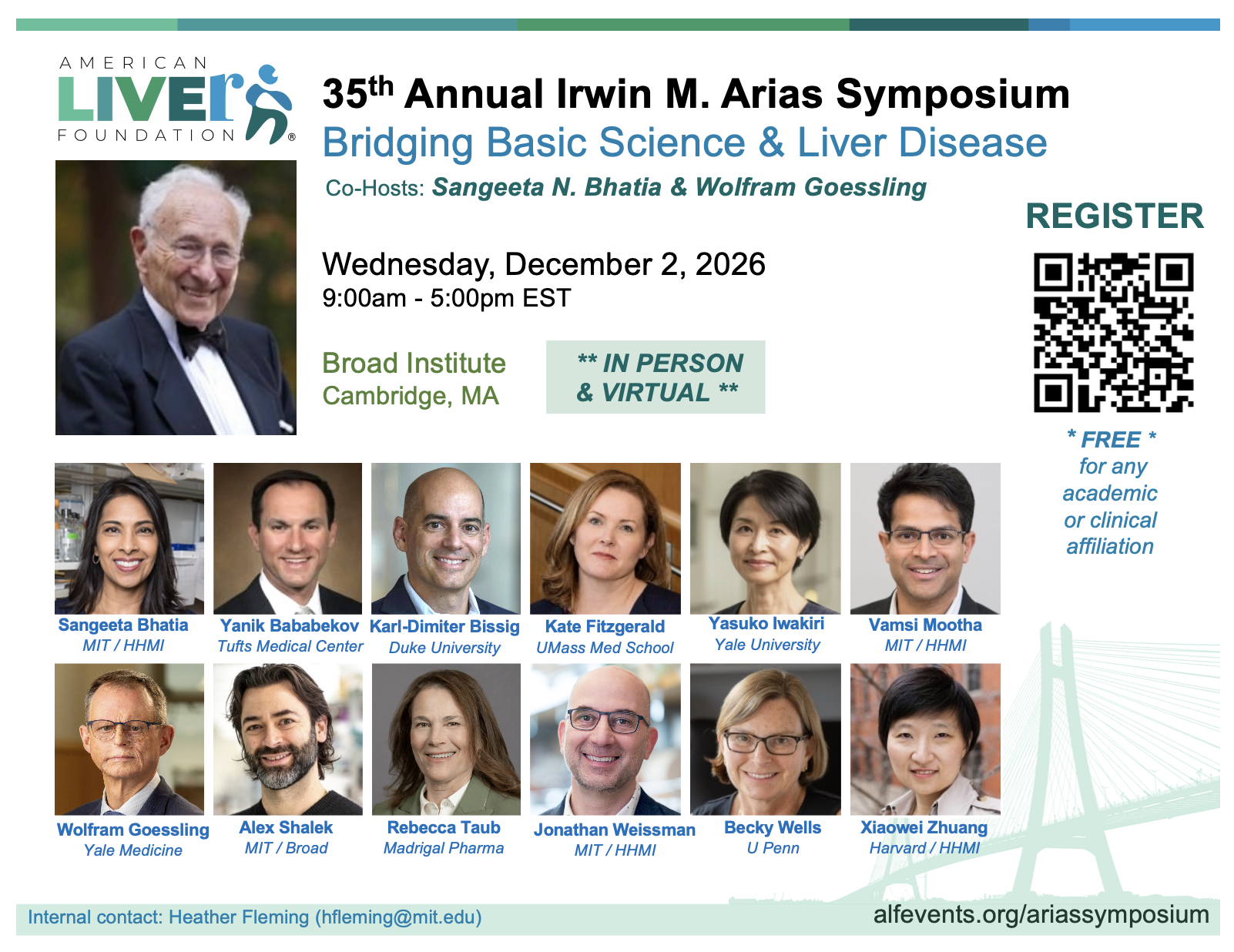
The 2026 symposium will be offered both in-person and virtually. In-person attendees will benefit from a poster session and networking opportunities with plenary speakers and other attendees. Breakfast, lunch, and a networking reception will also be provided to in-person attendees.
News
Announcing the 2026-2027 Class of Convergence Scholars
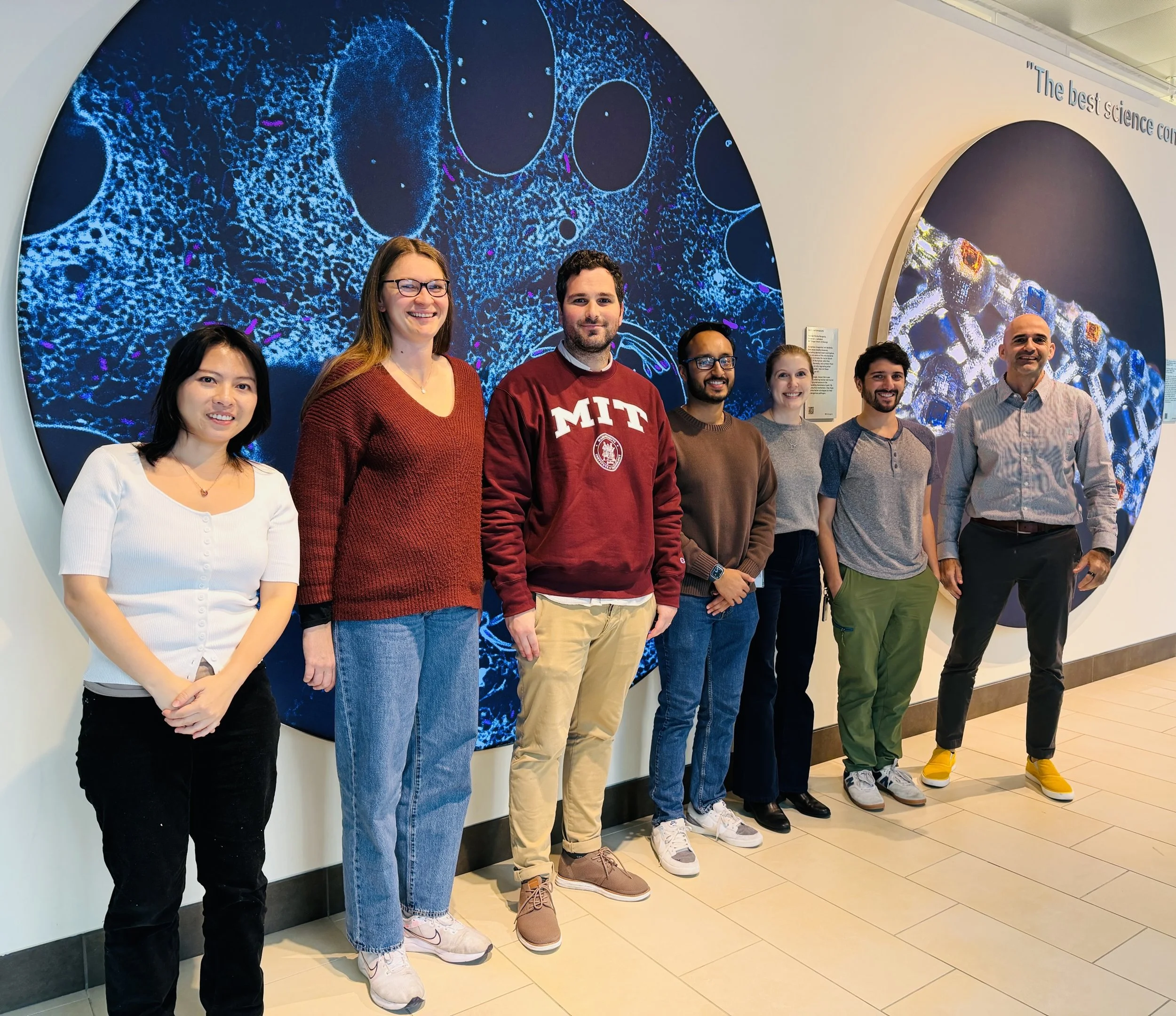
From left to right: Tina Huang (Jaklenec/Langer Labs), Manon Bulliard (Yilmaz Lab), Guillermo Arroy Ataz (Nabel Lab), Azmain Alamgir (Hammond Lab), Vanessa Kelley (Bhatia/Love/Adalsteinsson Labs), Brett Pogostin (Spranger Lab), and Tarek Fadel.
The MIT Koch Institute for Integrative Cancer Research just announced the 2026-2027 class of Convergence scholars. Since its inception, the program has supported more than 87 postdocs in furthering their career development:
Azmain Alamgir (Hammond Lab) is researching tumor-selective delivery in ovarian cancer using nanoparticles
Guillermo Arroy Ataz (Nabel Lab) is researching the biological hallmarks of thymic epithelial tumors, a rare cancer.
Manon Bulliard (Yilmaz Lab) is developing an integrated experimental and computational platform to expand clinically relevant information collected in routine histopathology for colorectal cancer.
Tina Huang (Jaklenec/Langer Labs) is engineering AI-guided microcapsule platforms for longer-lasting immunotherapy against melanoma.
Vanessa Kelley (Bhatia/Love/Adalsteinsson Labs) is researching approaches to selectively enrich tumor DNA in blood to enhance liquid biopsy sensitivity for the early detection of cancer.
Brett Pogostin (Spranger Lab) is investigating whether a protein-engineered cytokine can generate protective immunity in lung tumors.
Reprogrammed NK immune cells target cancer and autoimmune disorders
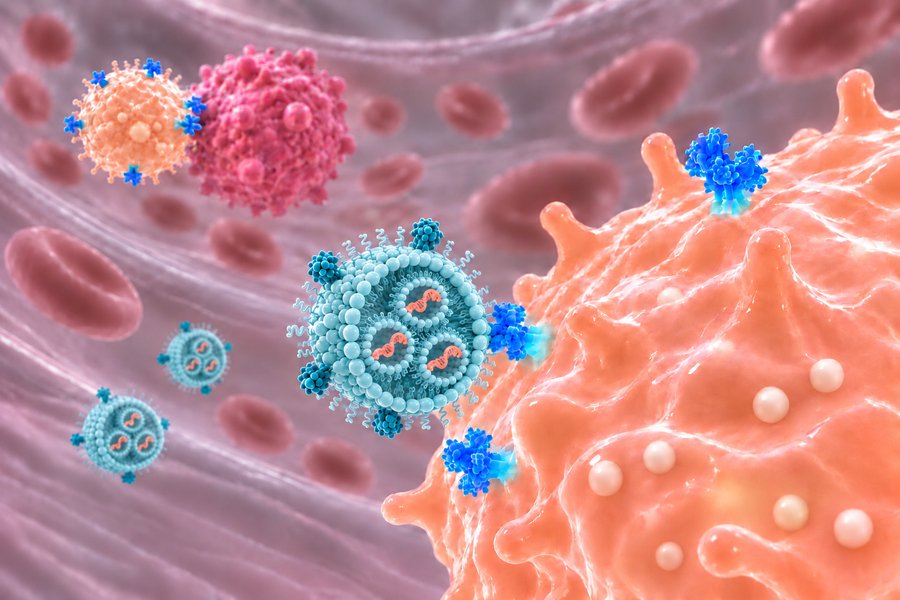
( Excerpt from Anne Trafton | MIT News) MIT engineers have developed a new way to program natural killer (NK) immune cells to target cancerous T cells or T cells that have become autoreactive, leading to diseases such as lymphoma and autoimmune hepatitis. Using their new technique, the researchers can reprogram NK cells to target diseased T cells without ever removing the NK cells from the patient’s body. Instead, they use lipid nanoparticles to deliver messenger RNA directly to NK cells. These mRNA molecules encode proteins that allow the NK cells to seek and destroy the dysfunctional T cells. Known as CAR NK cells, these cells could be deployed against a variety of diseases. The MIT team’s new approach could bypass one of the major obstacles to using these cells, which is the time and expense of manufacturing them outside the body. “The manufacturing challenges with CAR NK cells are significant. The idea here is you can deliver a nanoparticle that will modify your own NK cells with a CAR construct and teach them to attack tumor cells,” says Daniel Anderson, a professor in MIT’s Department of Chemical Engineering and a member of MIT’s Koch Institute for Integrative Cancer Research and Institute for Medical Engineering and Science.
Anderson is the senior author of the study, which appeared in Nature Biotechnology. The paper’s lead authors are MIT postdoc Yuang Chen and MIT graduate students Julia Monkovic and Haseeb Mughal. Robert Langer, the David H. Koch Institute Professor at MIT, is also an author.
You can watch a video of Dr. Yuang’s talk below:
MIT engineers create nanoparticles for delivering personalized cancer vaccines
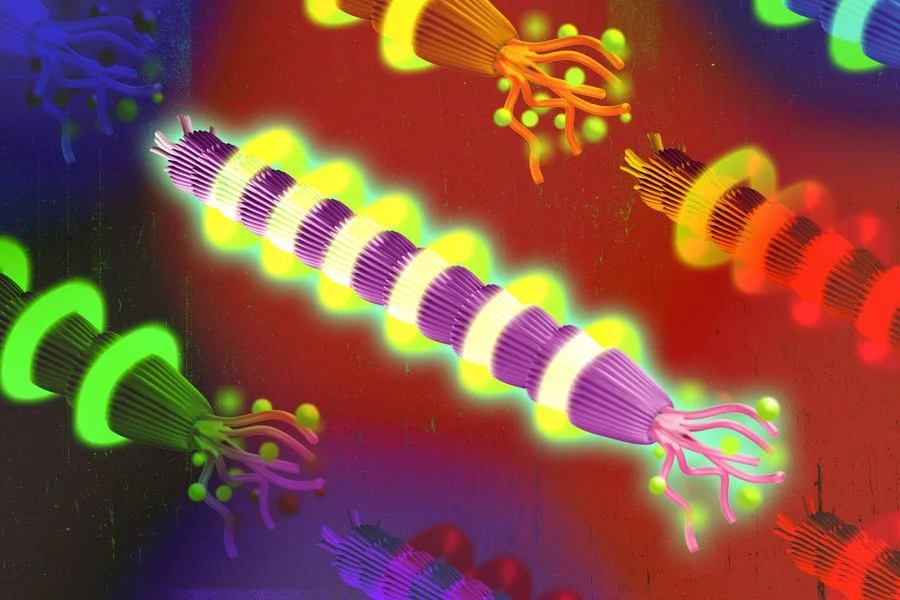
The backbone of the vaccine is a modified, harmless bacteriophage called M13, which forms a nanofiber that can be coated with cancer antigens. Credit: Jose-Luis Olivares, MIT
(Anne Trafton, MIT News) A nanoscale particle with a unique structure, developed at MIT, holds potential as a customizable delivery vehicle for personalized cancer vaccines. The backbone of the vaccine is a modified, harmless bacteriophage called M13, which forms a nanofiber that can be coated with cancer antigens. By precisely controlling the density of those cancer proteins, the researchers found that they could create a vaccine that prevents the development of colon tumors in mice. This type of delivery particle could be adapted to carry many different antigens, allowing for the creation of personalized vaccines to treat individual patients’ tumors, the researchers say.
“The great thing about this is that it’s modular and we could switch out different antigens on demand, so you could design it to be patient-specific and target a known antigen for a particular kind of cancer,” says Angela Belcher, the James Mason Crafts Professor of Biological Engineering and Materials Science and Engineering and a member of the Koch Institute.
Belcher is the senior author of the study, which appeared in the journal Advanced Healthcare Materials. Shengnan Huang, research scientist at the Koch Institute, is the paper’s lead author. Jack Rudrum, Huaiyao Peng, and Hao Nghi Luu, graduate students at the Koch Institute, are also authors of the paper. Read more…
Job opportunities
Open-Rank Tenure-System Faculty Position in Bioengineering, University of Texas at Dallas. The Department of Bioengineering in the Erik Jonsson School of Engineering and Computer Science at The University of Texas at Dallas (UT Dallas) invites applications for an open rank tenure-system faculty position in Bioengineering and/or Biomedical Engineering within the Health Innovations research thrust. Of particular interest is research in computational biomechanics. Candidates from related disciplines, such as Electrical Engineering, Mechanical Engineering, Computer Science, Materials Science, Physics, or Mathematics, whose research is relevant to Bio/Biomedical Engineering, may be considered. Candidates must have a PhD or equivalent and demonstrate the potential for excellence in research, teaching, and service.
Teaching responsibilities include undergraduate and graduate courses in the core biomedical engineering curriculum and in the candidate’s specialization. In addition to teaching, an active research program and service in the UT Dallas and/or professional community is expected. The appointment commences for the spring 2027 semester.
Scientist, LNP formulations, Thermofisher Scientific. Thermo Fisher's clinical Laboratories Functional Service Partnership (FSP) team plays a direct role in advancing drug development by creating sustained groups of talent within our customers’ organizations to provide long-term support. Through this collaborative approach, the team bringscommitment to excellence, industry knowledge, and operational strength directly into customer environments, helping to enhance capabilities and advance the delivery of life-changing therapies. Key responsibilities:
Manufacture small and large scale LNP formulations including production, purification and analysis of LNPs using industry standard protocols.
Maintain clear and complete ELN-based experimental records.
Proven ability to adapt to strategic changes in a dynamic and fast-paced drug development environment.
Funding opportunities
| Funding Source | Deadline | Accelerating Research through Collaboration (ARC) Awards | November 6, 2026 | CRI Technology Impact Award | November 15, 2026 |
|---|